A Magical Blend of Holiday Spirit
It is difficult to imagine Christmas without A Christmas Carol. Long before countless movie adaptations, stage productions, and television specials introduced new generations to Ebenezer Scrooge, Charles Dickens created a story that would become one of the most influential works in holiday history. The tale of a bitter old miser transformed by visits from three spirits has become so deeply woven into Christmas traditions that it is easy to take its impact for granted. That impact is precisely what author Les Standiford explores in The Man Who Invented Christmas.
At first glance, the title sounds like an exaggeration. Christmas existed for centuries before Charles Dickens was born, and no single author can claim responsibility for creating one of the world’s most celebrated holidays. Yet Standiford’s argument is not that Dickens invented Christmas itself. Rather, he makes a compelling case that Dickens helped shape the modern understanding of Christmas and influenced many of the traditions and values that people now associate with the holiday season. It is a fascinating idea, and one that becomes increasingly convincing as the book unfolds.
Standiford begins by examining Dickens during a particularly challenging period of his life. Although already a successful author, Dickens was facing financial pressures and dealing with disappointing sales from some of his recent works. At the same time, Christmas in Victorian England was undergoing a transformation of its own. While the holiday remained important, many of the customs and traditions people now associate with Christmas had either faded or were still developing.
Into that environment came A Christmas Carol. Published in 1843, the novella was an immediate success. Readers embraced the story’s themes of redemption, generosity, family, and compassion. Dickens presented Christmas not simply as a religious observance or annual celebration, but as a time when people should reconnect with one another, help those in need, and reflect on what truly matters. Today, those ideas feel inseparable from Christmas itself.
A Christmas Carol Brought Cultural Changes
What makes the book particularly interesting is the way Standiford connects Dickens’ work to broader cultural changes that were already taking place. Rather than arguing that Dickens single-handedly transformed Christmas, he demonstrates how A Christmas Carol arrived at exactly the right moment. The story gave voice to ideas that resonated deeply with Victorian society and helped popularize a vision of Christmas that continues to influence celebrations around the world.
Many of the traditions and values we now associate with Christmas can be seen throughout Dickens’ famous story. Family gatherings, charitable giving, concern for the less fortunate, festive meals, seasonal goodwill, and the importance of human connection all play central roles in the narrative. While Dickens certainly did not invent these concepts, he helped package them into a story that captured the public imagination in a way few books ever have.
One of the strengths of The Man Who Invented Christmas is its accessibility. Standiford combines biography, literary history, and cultural analysis into a narrative that remains engaging throughout. Readers learn about Dickens’ life, the circumstances surrounding the creation of A Christmas Carol, and the broader social conditions of Victorian England without ever feeling as though they are reading an academic study.
More Than A Story
The book reads more like a story than a history lesson, which makes it especially appealing for readers who enjoy Christmas history but may not consider themselves scholars of Victorian literature. Another aspect I particularly enjoyed was learning more about the writing process behind A Christmas Carol. It is easy to view the novella as an untouchable classic, but Standiford reminds readers that it was created by a working author facing deadlines, financial concerns, and professional pressures. Understanding those circumstances makes the book’s success even more remarkable.
The influence of A Christmas Carol extends far beyond the printed page. Since its publication, the story has inspired countless adaptations for stage, radio, television, and film. Generations of audiences have encountered Scrooge, Tiny Tim, Bob Cratchit, and the Ghosts of Christmas through productions that range from faithful retellings to creative reinterpretations.
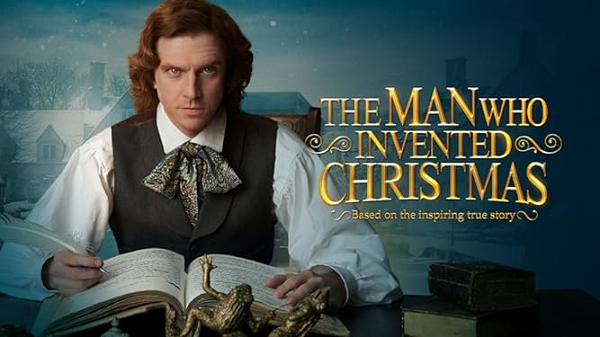
In fact, The Man Who Invented Christmas itself was adapted into a feature film in 2017. Starring Dan Stevens as Charles Dickens and Christopher Plummer as Ebenezer Scrooge, the movie explores the writing of A Christmas Carol and imagines the creative process that brought the story to life. While the film takes some liberties for dramatic purposes, it serves as an enjoyable companion piece to the book and introduces many of the same themes to a broader audience.
Seeing a Classic In a New Way
By the time I finished reading The Man Who Invented Christmas, I found myself looking at A Christmas Carol in a new way. Like many readers, I had always appreciated the story as a Christmas classic. What I had not fully considered was the extent to which Dickens’ work helped shape the holiday itself.
The book’s title may be intentionally provocative, but it succeeds because it encourages readers to think about the extraordinary influence a single story can have on an entire culture. Christmas existed long before Charles Dickens put pen to paper, but the Christmas many of us recognize today owes a remarkable debt to the characters, themes, and values he introduced in 1843.
For anyone who enjoys Christmas history, Charles Dickens, or simply learning how traditions evolve over time, The Man Who Invented Christmas is well worth reading. It offers an engaging look at the creation of one of the most influential holiday stories ever written and makes a compelling case that Dickens’ greatest gift to the world may not have been a book at all. It may have been helping generations of people rediscover what Christmas is truly about.