The History of Turducken
Every Thanksgiving table has its traditions. Some families serve a perfectly roasted turkey, while others prefer ham, prime rib, or even deep-fried turkey. Side dishes often inspire just as much debate as the main course, with family members fiercely defending recipes that have been passed down through generations.
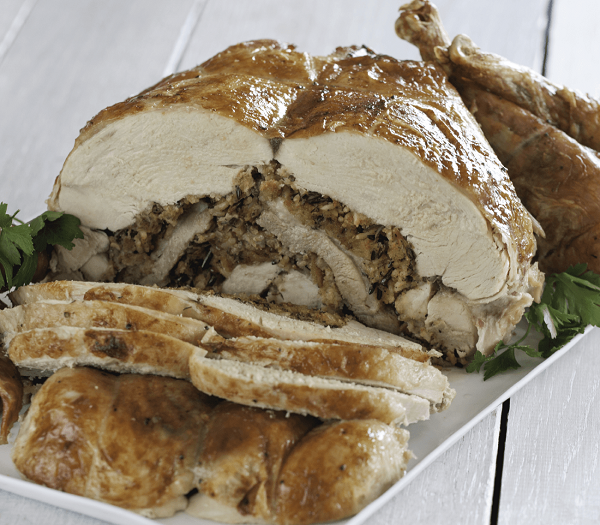
Then There Is The Turducken
For those unfamiliar with the dish, a turducken consists of a deboned chicken stuffed inside a deboned duck, which is then stuffed inside a deboned turkey. Layers of dressing are often placed between each bird, creating a meal that is every bit as impressive to look at as it is challenging to prepare. While the dish may sound like something invented as a holiday joke, it has become a legitimate Thanksgiving tradition for countless families across the United States.
Although the modern turducken is most closely associated with Louisiana and Cajun cooking, the concept behind it is much older than many people realize. Historians have documented examples of cooks placing one animal inside another for centuries. Elaborate versions of these dishes appeared at royal banquets and special celebrations throughout Europe long before Thanksgiving became an American holiday. Some recipes involved several layers of birds nested inside one another, creating meals that were intended to impress guests as much as satisfy their appetites.
The modern version of the turducken emerged in Louisiana during the late twentieth century, although exactly who deserves credit for its creation remains a matter of debate. Many food historians point to legendary Cajun chef Paul Prudhomme, who helped introduce the dish to a national audience through his restaurants, cookbooks, and television appearances. Others credit Louisiana meat markets and local cooks who were preparing variations of the dish around the same time. Like many beloved recipes, the true origin story has become a bit difficult to untangle over the years.
Regardless of who first assembled a chicken, duck, and turkey into a single meal, there is little doubt that Louisiana played a major role in popularizing it. Cajun cuisine has long been known for bold flavors, creative cooking techniques, and a willingness to take traditional recipes in unexpected directions. In many ways, the turducken feels like a natural extension of that culinary spirit.

The dish may have remained a regional curiosity if not for an unexpected source of publicity: professional football. During the 1990s, legendary NFL broadcaster John Madden became fascinated with the turducken and began featuring it during Thanksgiving broadcasts. Madden’s enthusiasm for the dish quickly became part of the holiday tradition for football fans across the country. Millions of viewers who had never heard of a turducken suddenly found themselves listening to detailed explanations of its construction while watching Thanksgiving Day football.
Americans Introduction to the Dish
As interest grew, specialty meat markets and grocery stores began offering prepared turduckens during the holiday season. What had once been a regional specialty became something that families from coast to coast could order for their Thanksgiving celebrations.
Part of the turducken’s appeal is the sheer amount of work involved in creating one. Preparing the dish requires carefully deboning three different birds while preserving enough structure to hold everything together. Dressing is layered between each bird before the entire creation is seasoned, assembled, and roasted. When sliced, the finished product reveals distinct layers of turkey, duck, chicken, and stuffing, creating a presentation that rarely fails to attract attention at the dinner table.
Of course, not everyone is willing to spend that much time in the kitchen. Fortunately, many butcher shops and specialty food retailers now do the hard work themselves, allowing families to enjoy the experience without mastering the art of poultry deboning.
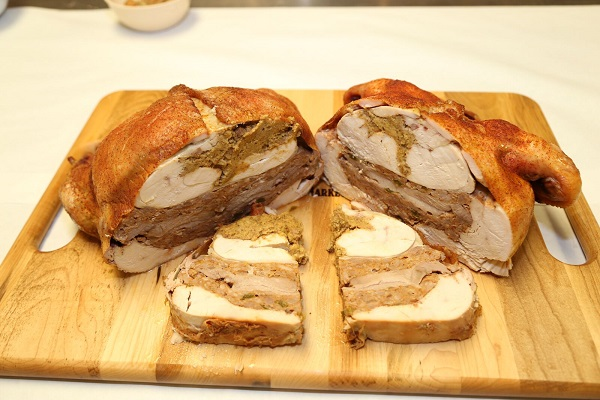
An Unexpected Memorable Tradition
Beyond its unique appearance, the turducken has become a symbol of the abundance associated with Thanksgiving. The holiday has always been about gathering family and friends around a table filled with food, conversation, and tradition. A meal built around three different birds certainly fits that spirit. It is difficult to think of another dish that captures the “more is more” philosophy of holiday entertaining quite so effectively.
Perhaps that is why the turducken continues to generate so much curiosity. Even people who have never tasted one are usually familiar with the concept. The name alone tends to spark questions and conversations. Some people view it as culinary creativity at its finest, while others see it as an example of holiday excess. Either way, it is nearly impossible to ignore.
Today, the turducken occupies a unique place in Thanksgiving culture. It is not as common as a traditional turkey, nor is it intended to replace one. Instead, it serves as a reminder that holiday traditions are constantly evolving. Families adopt new recipes, experiment with different foods, and occasionally discover something that becomes part of their celebrations for years to come.
Whether you consider it a masterpiece of Cajun cooking or simply one of the most unusual dishes ever served at a Thanksgiving meal, there is no denying that the turducken has earned its place in holiday history. After all, Thanksgiving is a holiday built around sharing food with the people we care about, and few dishes create more conversation around the table than a turkey stuffed with a duck stuffed with a chicken.