Designing Like a Theme Park
Last week, we talked about the importance of giving your Christmas decorations a theme. Having a recognizable identity helps everything work together, but choosing a theme is only part of the process. Once you’ve decided what kind of Christmas experience you want to create, there’s another question worth asking. How can you make it something people will genuinely remember?
For a little inspiration, we can turn to an industry that knows a thing or two about capturing people’s imaginations. When you visit a theme park like Disney or Universal, the attractions aren’t simply built and left for visitors to figure out. Designers spend an enormous amount of time considering what people see first, how to build anticipation, where their attention will go, and what they’ll remember afterward. Even details that seem insignificant can have a purpose.
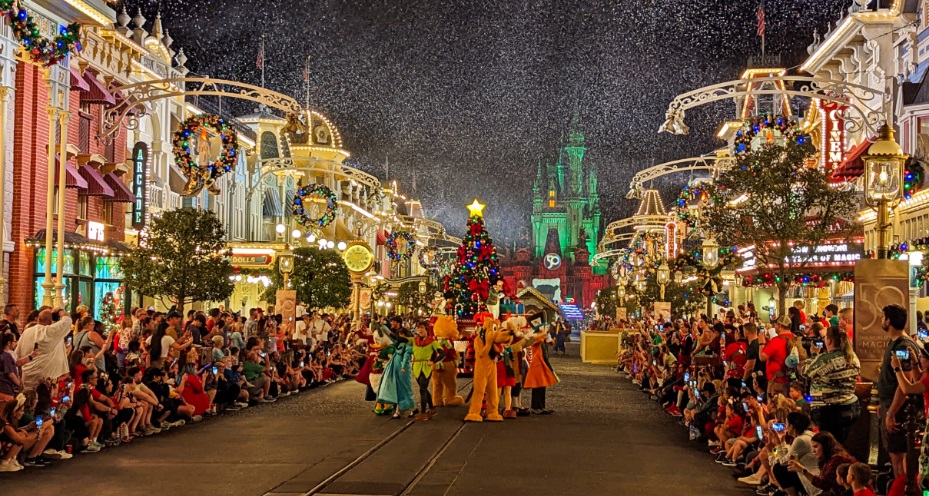
Now, I’m not suggesting you start measuring your front yard for a replica of Cinderella Castle. Most of us don’t have the budget, staff, or property to pull off anything approaching a professional theme park attraction. We’re working with an ordinary house, a driveway, some landscaping, and whatever yard space the HOA hasn’t found a reason to complain about. But many of the principles used by professional designers can be adapted to Christmas decorating, and some of them don’t require spending another dime.
Creating Anticipation Before Visitors Arrive
Theme parks are particularly good at building excitement before visitors ever reach an attraction. The landscaping, signs, buildings, and surrounding scenery are often carefully arranged to establish expectations about what lies ahead. By the time you reach the main attraction, you’ve already begun experiencing it. Disney’s Main Street, U.S.A. is a great example. When you enter the Magic Kingdom at Walt Disney World, your eyes are naturally drawn down the street toward Cinderella Castle. The castle becomes a visual destination, inviting you to continue exploring. Designers call this a sightline, an intentionally arranged view that draws attention toward a particular feature.
Your own Christmas decorations have sightlines too, whether you’ve planned them or not. Someone approaching your house from the left may see an entirely different arrangement than someone coming from the right. A large illuminated tree might dominate one view, while the roofline or a brightly lit garage becomes the most noticeable feature from another direction.
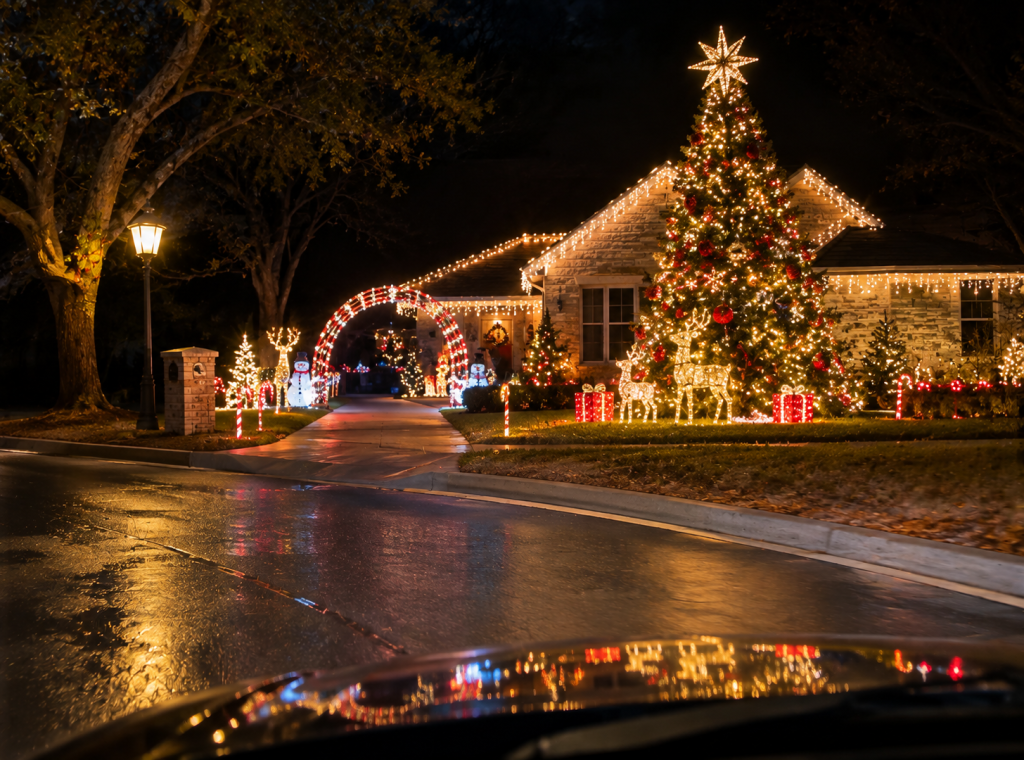
Try taking a drive down your street from both directions and pay attention to what catches your eye. Is there something that naturally draws attention toward the house? Does the arrangement create a sense of anticipation, or does everything appear at once? If you have a walk-through attraction, consider what visitors see as they approach the entrance and whether it encourages them to explore farther. Creating a stronger sightline doesn’t necessarily mean rearranging the entire yard. It might be as simple as moving a decoration into a more prominent position, adjusting the lighting around a particular feature, or removing something that’s blocking the view. The idea is to be a little more intentional about that first impression.
Telling a Story Without Saying a Word
One of the things I’ve always enjoyed about theme parks is how they can tell a story without actually explaining it. Walk into a pirate village or an old abandoned mansion, and you immediately begin forming an impression of the place. You don’t need someone standing at the entrance reading a description of what you’re supposed to be seeing.
This technique is called environmental storytelling. Designers use scenery and small details to suggest what’s happening within an attraction. A stack of packed suitcases might tell you someone is preparing for a journey, while a workshop filled with tools and unfinished projects suggests that someone has been busy. None of these details needs an explanation because we naturally connect them to the larger setting. Christmas decorations lend themselves particularly well to this approach because so many of our favorite characters and traditions already come with familiar stories.
Let’s say you have Santa, his sleigh, and a few reindeer. You could arrange them together on the lawn, and everyone would immediately recognize the scene. But what if you wanted people to feel as though they’d stumbled upon Santa making his final preparations for Christmas Eve? You might position the reindeer as though they’re waiting to be harnessed, with packages stacked beside the sleigh and a few elves making last-minute preparations. A lantern or softly illuminated work area could suggest that everyone is getting ready for the big night. You’re still using familiar decorations, but now they’re doing something together rather than simply occupying the same patch of grass.
The same idea works with a winter village, Santa’s workshop, or a nativity scene. Think about what might be happening in that setting and how the arrangement of a few simple elements could help tell the story. You don’t need elaborate custom props, and you certainly don’t need a large sign explaining everything. Sometimes allowing visitors to figure out the little details themselves is part of the fun.
Making a Small Yard Feel Bigger
Another trick theme parks have mastered is making relatively small spaces feel much larger than they actually are. One way they accomplish this is through forced perspective, a technique that uses differences in scale and proportion to create the illusion of greater size or distance. Disney uses this technique along Main Street, U.S.A., where the upper stories of many buildings are constructed at smaller scales than the lower levels. The result makes the buildings appear taller than they really are. It’s a clever illusion that takes advantage of how our brains interpret size and distance. You’re probably not going to rebuild your house to incorporate forced perspective, but there are some interesting ways to use the same idea in your yard.
Imagine creating a winter forest using illuminated trees. Instead of arranging trees of similar height throughout the area, try placing larger ones closer to the viewing position and progressively smaller ones farther back. From the right angle, the arrangement can suggest a forest extending much farther into the distance than your property actually allows. A miniature Christmas village offers another opportunity. Smaller buildings and trees placed toward the rear of the scene can help create the impression of a town stretching into the distance. You can experiment with the same technique using custom-built scenery, decorative figures, or other elements where scale can be controlled.
There is a catch, however. Forced perspective usually works best from a particular viewing angle. An arrangement that looks convincing from across the street may lose the illusion when someone walks through the yard and sees it from the side. That’s worth considering before investing a lot of time in something that only works from one spot. Lighting can also help reinforce the effect. Softer illumination in the background and stronger emphasis on nearby features can contribute to a sense of depth, particularly when combined with differences in scale. It’s a creative way to make a modest space feel more expansive without wishing you had another twenty feet of front yard.
The Art of the Reveal
Theme parks also know how to create a good reveal. Sometimes a major attraction is partially hidden by buildings or landscaping, only becoming visible when visitors reach a particular point. Other times, lighting, sound, or movement builds anticipation before something dramatic happens. The effect works because people aren’t being shown everything at once. There’s an element of discovery, and that little moment of surprise can make an attraction considerably more memorable.
Creating a reveal in a residential setting can be challenging, especially when most of the yard is visible from the street. But if you have synchronized lighting or a walk-through arrangement, there are some opportunities to borrow the idea. For example, imagine a musical sequence that begins with only a few softly illuminated elements. As the music builds, additional sections come to life until the entire house is illuminated during a dramatic moment. The impact comes not simply from how many lights are operating, but from the anticipation created before everything turns on. A walk-through attraction can accomplish something similar through placement. Perhaps a larger scene is positioned where visitors won’t see it immediately upon entering. As they follow the pathway, the arrangement gradually becomes visible, giving them something new to discover.
You don’t need complicated technology to make this work. Sometimes the surprise is a particular decoration coming to life at just the right moment, or a scene that wasn’t obvious from the entrance. The important thing is giving people something to anticipate rather than having every feature demand attention continuously.
Using Sound to Your Advantage
When we think about Christmas decorating, most of our attention naturally goes toward what people will see. But sound can play an equally important role in creating the right atmosphere. Imagine walking through an old western town at a theme park and suddenly hearing futuristic electronic music coming from the buildings. Something would feel out of place, even if you couldn’t immediately explain why. The scenery might be convincing, but the sound wouldn’t match the environment. The same principle applies at Christmas. A peaceful winter village might benefit from gentle instrumental carols, while a more playful Santa workshop could work well with something upbeat. Music helps reinforce the personality of the setting and can change how people feel about what they’re seeing.
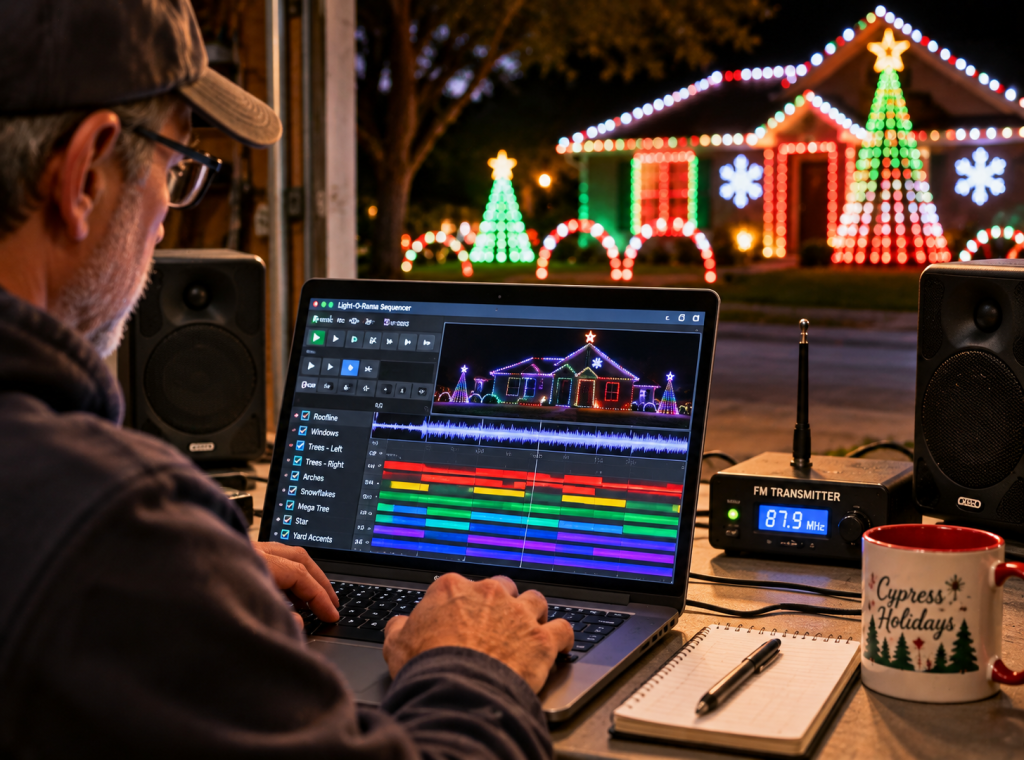
If you’re using computerized lighting, you’re probably already familiar with the relationship between music and visual effects. We’ve been synchronizing lights to music at Johnson’s Christmas Corner since 2007, and part of the enjoyment is figuring out how to make the lighting complement what’s happening in the song. Sometimes that’s a dramatic effect during a powerful passage, while other moments call for something considerably more subtle. But you don’t need a synchronized show to use sound effectively. Background music can help establish the mood of a walk-through attraction, and occasional sound effects can bring certain scenes to life. A little workshop activity or the sound of sleigh bells might add personality without requiring an elaborate audio system.
Of course, there’s one consideration that theme parks don’t have to deal with quite the same way we do: neighbors. Keeping the volume reasonable is important, especially in residential neighborhoods where not everyone wants to listen to Christmas music every evening. An FM transmitter can be a good solution for drive-by displays because visitors can enjoy the soundtrack through their car radios without broadcasting it across the neighborhood.
Understanding Pacing
Have you ever watched a movie that seemed to have one action scene after another, with barely enough time to catch your breath between them? Even when the individual scenes are impressive, the constant excitement can eventually become exhausting. Theme park designers have to think about this too. They consider how long visitors spend in different areas, how quickly the experience unfolds, and when to introduce moments of excitement or relaxation. This is called pacing, and it’s an important part of keeping people interested.
For Christmas decorators, pacing depends largely on how visitors experience the property. If most people are driving past your house, you may have only thirty seconds to make an impression. They’ll slow down, take a look, and continue down the street. That means the main features need to be recognizable fairly quickly, without requiring someone to stop and study every little detail.
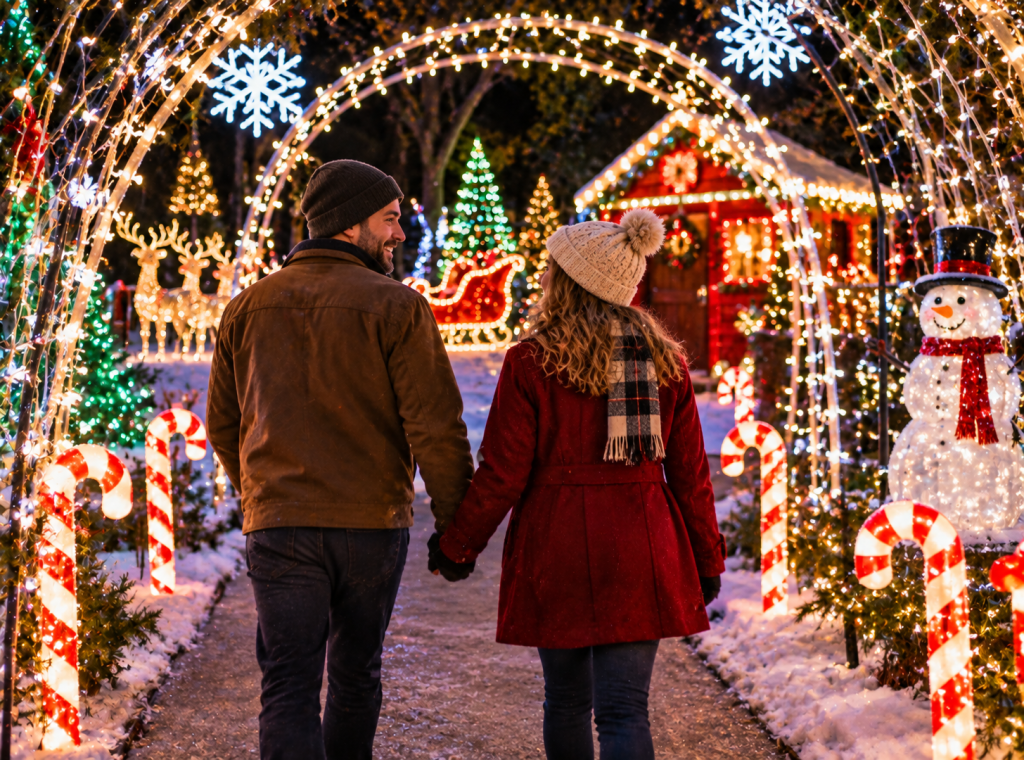
Walk-through attractions offer a different opportunity. Visitors can spend several minutes exploring, which allows you to introduce scenes gradually and provide smaller details for people to discover. You also have to consider how they move through the area. A narrow pathway or particularly popular feature can create a bottleneck, leaving people standing in one place while missing everything else.
Synchronized lighting introduces another kind of pacing. A playlist filled entirely with high-energy songs might sound exciting, but a little variety can make the overall experience more enjoyable. Slower arrangements provide contrast and give the more dramatic sequences an opportunity to stand out. At Johnson’s Christmas Corner, we’ve experimented with many musical styles over the years, including traditional carols, rock arrangements, and movie favorites. Each style creates different opportunities for lighting effects, and changing the musical character throughout the program can help keep things interesting.
The important thing to remember is that people experience your creation over a period of time. What they see first, how things change, and what happens next can be just as important as the individual decorations.
Guiding the Visitor’s Attention
Another technique theme park designers use is directing people’s attention without making it obvious. They rely on lighting, movement, sound, and the arrangement of scenery to encourage visitors to look toward particular features at particular moments. You can do the same thing in your yard, especially if several different elements are competing for attention. Let’s say you have a large Christmas tree, Santa and his sleigh, and a collection of smaller decorations. During a synchronized sequence, you might dim the surrounding lights while gradually increasing the brightness of the tree. Without any explanation, you’ve encouraged everyone to focus on that particular feature.
You don’t need computerized lighting to accomplish something similar. A well-positioned spotlight can draw attention toward an important scene, while softer lighting elsewhere allows it to stand out naturally. Even the direction your decorations face can influence where people look, particularly when several figures appear to be interacting with the same object. This doesn’t mean every moment needs to be carefully controlled. People should be free to explore and enjoy the decorations in their own way. But when there’s something particularly important or interesting you want them to notice, a little visual guidance can make a difference.
The Little Details People Discover
One of the pleasures of visiting a well-designed theme park is discovering something you missed the first time. It might be a small sign, an amusing detail tucked into the scenery, or a clever reference that makes you smile when you finally notice it. These little discoveries help make an environment feel more complete. The larger attractions capture your attention, but the smaller details give you another reason to look around.
You can incorporate the same idea into Christmas decorating without spending much money. Maybe there’s a small elf peeking out from behind a workshop window, a forgotten package beside Santa’s sleigh, or a tiny character hiding among the trees. These details can add personality and reward people who take the time to look a little closer.
The key is making sure those details suit the way visitors see your property. If everyone watches from their cars, a tiny elf hidden forty feet from the street probably isn’t going to get much attention. Walk-through attractions offer more opportunities for smaller surprises because people can get closer and explore at their own pace. And not every little detail needs to be immediately obvious. Sometimes the fun is hearing a child excitedly point out something the adults completely missed.

Give People Something to Remember
Think about the Christmas displays you’ve visited over the years. Chances are, you don’t remember how many lights were installed or every decoration that appeared in the yard. What you probably remember is something specific that caught your attention. Maybe it was a particularly beautiful winter scene, a clever animated feature, or a moment when an entire house suddenly came alive with music. Sometimes it’s something much simpler, like a familiar decoration that reminds you of Christmas when you were a child.
Theme park designers understand the importance of those memorable moments. There’s even a psychological concept known as the peak-end rule, which suggests that our memories of certain experiences are influenced heavily by their most intense moments and how they conclude. It doesn’t explain every kind of memory, but it’s an interesting principle to consider when planning an attraction.
For a walk-through setting, that might mean positioning a particularly impressive scene near the end of the visitor’s route. A synchronized show might benefit from a strong musical finish, with the lighting creating a memorable final moment. For a traditional drive-by arrangement, there may not be a formal beginning or ending, but you can still create something distinctive that stays with people after they leave. It doesn’t have to be the biggest or most expensive feature in the yard. Sometimes a clever idea or an especially charming scene is all it takes.
And if you’ve ever had a child beg their parents to drive around the block for one more look, you already know how powerful a memorable Christmas moment can be.
Testing Your Design
Here’s something theme park designers and Christmas decorators definitely have in common: what looks wonderful in your imagination doesn’t always work quite as well in real life. You might spend hours programming a lighting sequence, only to discover that the effects don’t look the way you expected from across the street. Or perhaps you’ve arranged a scene that makes perfect sense to you, but visitors don’t immediately understand what they’re looking at. That’s why it’s worth taking the time to experience everything from the audience’s perspective.
Once the lights are up and operating, drive down your street and look at the house as though you’re seeing it for the first time. Pay attention to what catches your eye, whether certain decorations are hidden behind others, and whether the overall arrangement makes sense from the normal viewing area. If you have a synchronized show, watch it from beginning to end without concentrating on the technical details. Instead, notice whether the lighting works with the music and whether the important moments are easy to appreciate. For a walk-through attraction, follow the same route visitors will take and look for places where views are blocked, pathways become crowded, or the experience feels confusing.
It also helps to ask someone else what they think. Family members and friends who haven’t spent weeks installing everything may notice things you’ve overlooked. You don’t have to agree with every suggestion, but a fresh perspective can be surprisingly valuable. And don’t overlook what visitors themselves are telling you through their reactions. Notice where people stop, what children point toward, and which features seem to attract the most attention. Those observations can help you make adjustments now and give you ideas for future seasons.
Final Thoughts
There’s absolutely nothing wrong with putting lights on your house simply because you enjoy decorating for Christmas. For many families, the tradition of hanging lights and bringing out familiar decorations is every bit as important as the finished result. Not everyone wants to turn their front yard into an elaborate production, and there’s no reason they should. But if you’re like us and enjoy finding new ways to improve what you’ve created, theme park design offers some fascinating ideas worth exploring. Learning how to guide someone’s attention, build anticipation, tell a story through scenery, or make a small space feel larger can change the way you approach the entire project. And none of these techniques requires a massive budget or sophisticated equipment. A simple change in placement, a different lighting choice, or a little more thought about how visitors approach your house can sometimes make a greater difference than another expensive decoration.
Johnson’s Christmas Corner has grown and changed through years of experimenting with new ideas, trying different technologies, and learning from the occasional mistake. That’s part of what keeps this hobby interesting. No matter how long you’ve been decorating, there’s always something new to discover and another way to improve what you’ve already built.
The next time you’re standing in front of your house admiring the lights, try looking at everything from a visitor’s perspective. Think about what they’ll notice first, what might surprise them, and what they’ll remember after driving away. You might discover opportunities that have been sitting right in front of you all along. We’re probably never going to build a theme park in our front yards, and I’m fairly certain the neighbors would prefer that we didn’t. But there’s nothing stopping us from borrowing a little of the creativity that makes those places so memorable.
After all, we’re not trying to build the next Disney attraction. We’re just trying to create a little Christmas magic in our own corner of the world.
Watch for Our Next Article:
“The Psychology of Christmas Lights:
Why People Slow Down, Smile, and Stay”