From Zero to WOW!
Building Your First Real Christmas Display
There is usually a moment when decorating for Christmas changes. Maybe you have always put a few strands of lights along the roof, wrapped a tree in the front yard, or placed a lighted Santa near the door. Then one Christmas you drive through a neighborhood and see a house that makes you slow down. There are lights across the roof, decorations throughout the yard, trees glowing from top to bottom, and somehow all of it seems to fit together. You look at your own house and start thinking, “We could do that.”
That is how a lot of Christmas displays begin, and the temptation is to immediately start shopping. A few new strands of lights become a lighted reindeer, an inflatable snowman, some candy canes and whatever else happens to look good in the Christmas aisle. Individually, there is nothing wrong with any of those things, but simply buying more decorations does not necessarily create a better display. Some of the most memorable Christmas displays aren’t the biggest or most expensive. They are the ones that look like they belong at the house where they were built.
Start With the House You Already Have
Before buying anything, walk outside and look at your house from the street. Not from the front porch or while standing underneath the eaves trying to figure out where you can reach with a ladder. Walk far enough away that you can see the entire property the way someone driving past will see it.
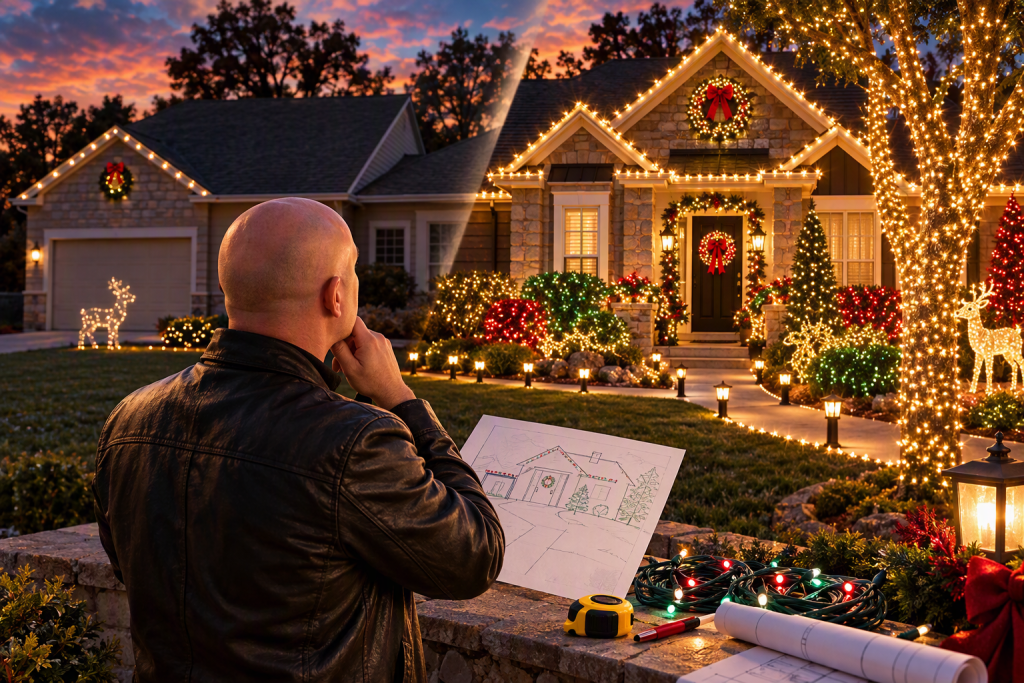
Every house already has features that can become part of a Christmas display. Rooflines create natural outlines. Columns can be wrapped. Bushes can provide large areas of color. Trees add height, while sidewalks and driveways create natural boundaries that can be followed with lights or decorations. Some houses practically tell you where the lights should go once you stop looking at individual places to hang decorations and start looking at the property as a whole.
A roofline is often a good place to begin because it immediately defines the house after dark. From there, you might add lights to bushes or trees, decorate around the front door, or create something in the yard. You don’t need to cover every available surface, either. Empty areas give individual elements room to stand out and keep the entire property from becoming one enormous mass of Christmas stuff. And yes, there absolutely is such a thing as too much Christmas stuff. We say that as people who own a considerable amount of Christmas stuff.
Figure Out What Christmas Looks Like to You
One of the best things about Christmas displays is that there isn’t a correct way to create one. Some people love warm white lights and greenery, while others want every color they can find. Some yards are filled with handmade wooden decorations that have been used for decades. Others feature inflatables, blow molds, wireframes, projection effects, pixels or animated lights synchronized to music. They can all make wonderful Christmas displays.
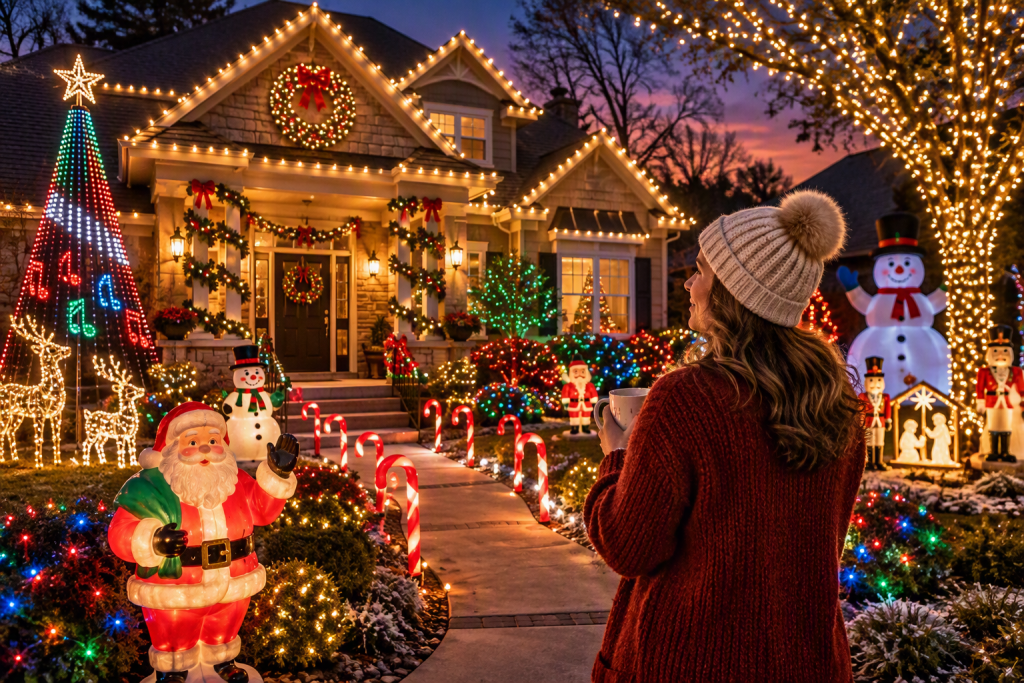
What matters more is whether the display reflects the people who created it. Christmas itself is a mixture of traditions, memories, colors, characters and styles, so there is no reason a display can’t be the same way. You don’t need to choose a rigid theme and then reject anything that doesn’t match it perfectly. Having some general idea of what you enjoy, however, can keep you from buying decorations simply because they happen to be sitting in front of you.
If you love multicolored lights, don’t build an all-white display because somebody on the Internet told you it looks more elegant. If you love inflatables, use inflatables. If your favorite decoration is the plastic Santa your parents put outside when you were a kid, give Santa a place of honor. You’re building your Christmas display, not auditioning for someone else’s.
Buy for the Display You Have
This is probably where the most money gets wasted. Once you start getting serious about Christmas decorating, it becomes remarkably easy to buy things for some future version of your display. You see a decoration on clearance and think, “I can use that someday.” Maybe you can, but sometimes “someday” means it sits in a box in the garage for three years while you try to remember why you bought it.
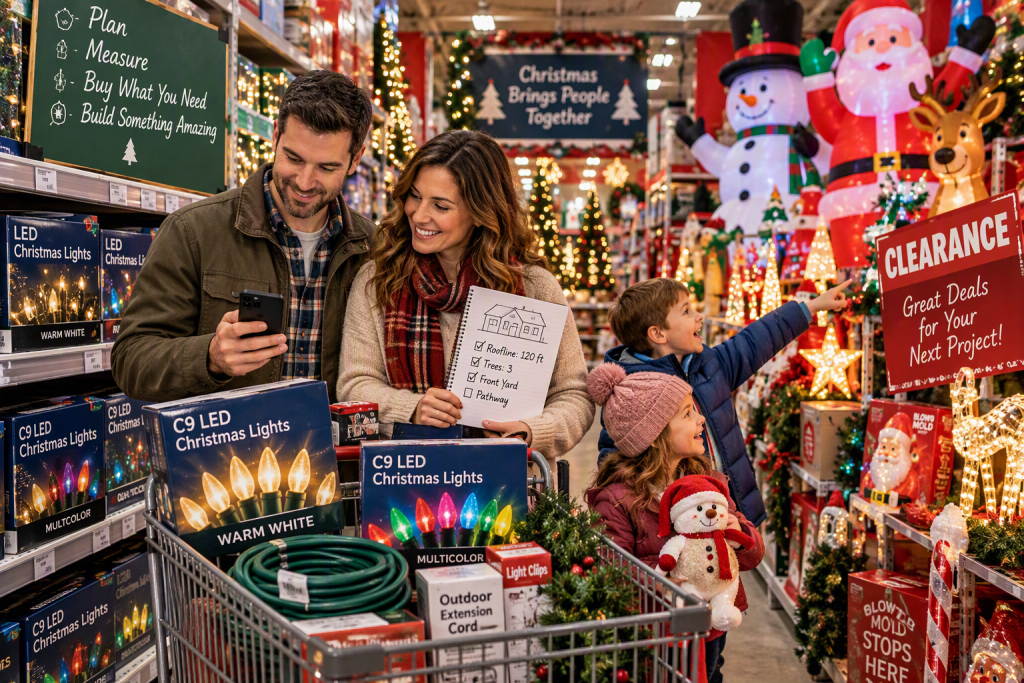
A better approach is to buy things when you have at least some idea where they are going. If you want to light the roofline, measure it and buy what you need. If you want to wrap the oak tree, figure out approximately how many lights it will take. If there is an empty area of the yard that needs something, think about what would actually work there before heading to the store.
That doesn’t mean you should never grab a great clearance deal. Anyone who has decorated for Christmas long enough has bought something in January simply because the price was too good to ignore. Just make sure you’re buying decorations you can actually use rather than slowly building a warehouse of things that seemed like a good idea at 75 percent off.
Don’t Try to Build Everything in One Christmas
Cypress Holidays certainly didn’t become what it is today in a single season. Our own display grew over time as things were added, other things disappeared, technology changed and we learned what worked on our property. That process is part of the fun, and there is no reason somebody building a display today needs to skip it.
Your first serious display might be a roofline, a couple of trees, some lights around the landscaping and a few decorations in the yard. That may not sound enormous, but if those elements work well together, the result can look fantastic. The following year you might add another section, discover blow molds, decide the big tree needs lights or start wondering what it would take to synchronize everything to music. That last thought can become dangerous. Ask us how we know.
Allowing a display to grow over time also gives you the chance to figure out what kind of decorator you are. You may discover that you love building your own decorations or become obsessed with getting roofline lights perfectly straight. You might decide animation is your thing, or you may find that what you really enjoy is creating a traditional display that reminds you of Christmas when you were a kid. You don’t know any of that when you’re standing in the Christmas aisle buying your first few boxes of lights.
Your First Season Will Teach You Plenty
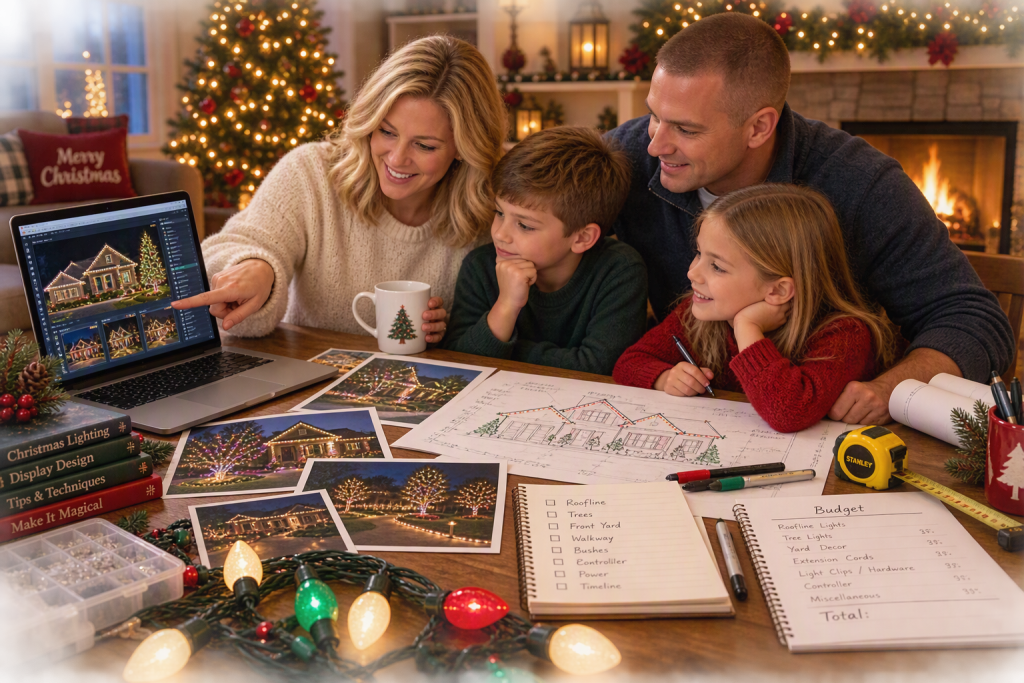
No matter how carefully you plan, your first display is going to teach you things you couldn’t have known beforehand. Something will be too dark while something else will be much brighter than you expected. An extension cord will inevitably be six feet too short. A decoration that looked enormous in the store will somehow disappear once you put it in the yard, and at least one strand of lights will stop working at the worst possible time because apparently that is required by Christmas law.
Pay attention to those little lessons because they make the next year’s display better. Take pictures from across the street and look at the display from the direction most visitors will see it. Notice where your eye naturally goes, which areas seem empty and whether anything feels crowded. Sometimes moving a decoration ten feet does more for the display than buying another one.
When the season ends, it is also worth making a few notes before everything gets packed away. Eleven months is a long time to remember exactly why you swore you were going to move that snowman next year. A few photographs and notes can save a surprising amount of head scratching when the boxes come back out.
Spend Money Where It Actually Helps
Christmas decorating can become an expensive hobby very quickly, but expensive does not automatically mean impressive. Some of the least exciting purchases can actually make the biggest difference over time. Reliable lights, good outdoor extension cords, proper electrical connections and mounting hardware that keeps everything straight and secure aren’t nearly as exciting as bringing home a new Santa, but you will appreciate having them every December.

Storage deserves some thought as well. Decorations spend most of their lives packed away, and protecting them for the other eleven months of the year can save a lot of money and frustration. Quality becomes increasingly important as a display grows because replacing the same cheap item every couple of years eventually costs more than buying something decent in the first place.
At the same time, don’t convince yourself that you need professional equipment to create something people will enjoy. You don’t need computerized controllers, thousands of pixels, specialized software or a garage full of equipment to build a great Christmas display. Those things can come later if that’s where the hobby takes you. There is plenty of room between a couple of strings around the porch and a fully synchronized light show.
Let the Display Become Yours
After you have been decorating for a few years, something interesting starts to happen. Certain decorations become expected. Neighbors recognize them, kids remember them and family members develop favorites. Some pieces may not be the newest decorations you own or even things you would buy today, but they have become part of Christmas at your house.
That is when a collection of lights and decorations starts becoming your Christmas display. It develops a personality and, eventually, a history. New things get added alongside decorations that have been there for years, and memories become attached to all of it. In many ways, that’s not much different from the ornaments hanging on the Christmas tree inside the house.
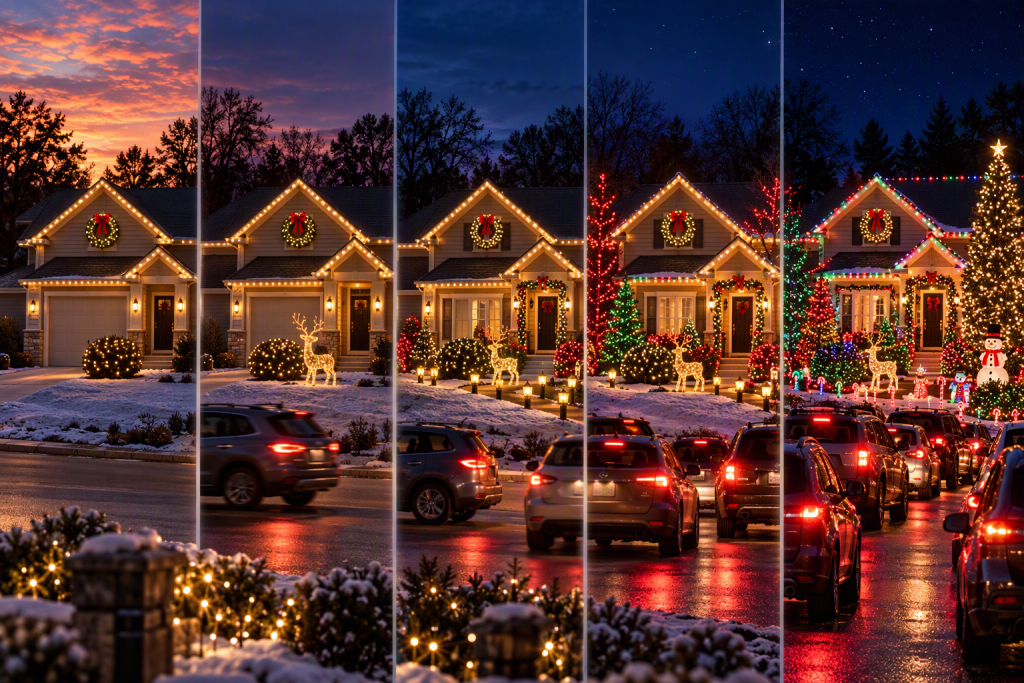
So if you’re looking at your home this year and thinking it might finally be time to do something bigger, don’t worry about creating the house everyone will drive across town to see. Start with the house you have and the things you enjoy. Buy decorations because you can picture where they belong, learn from the first season and add to the display as your ideas and traditions grow.
Before long, you may notice cars slowing down in front of your house and kids looking out the windows. Somewhere in one of those cars might be someone looking at what you’ve created and thinking exactly what you once did: “We could do that.”
Watch for Our Next Article:
Why Your Christmas Display Doesn’t Feel Magical (And How to Fix It)