ShowForged: The Future of Sequencing
Anyone who has built an animated Christmas display knows there is a point where adding another song stops sounding like fun and starts sounding like work. Finding a sequence is one thing, but finding one that actually fits your display can be something else entirely. Props are different, layouts are different, and while some displays are almost entirely pixels, others still have plenty of traditional AC lighting or a mixture of technologies accumulated over years of building and rebuilding a show. Sequencing from scratch solves some of those problems, but it can also consume hours for a single song.
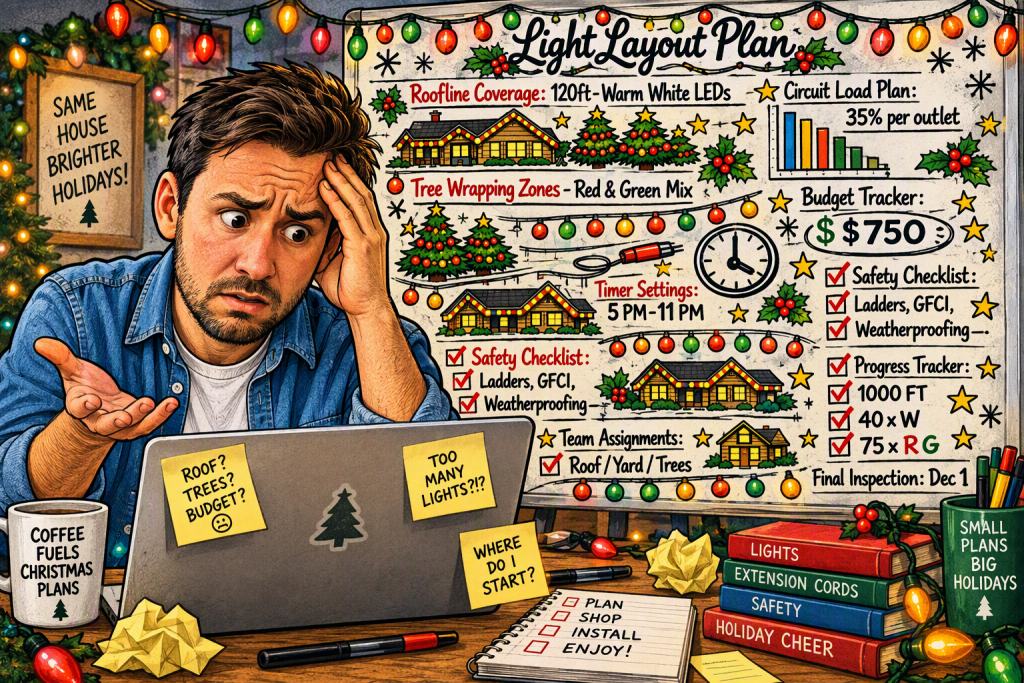
Those frustrations are what led software developer and fellow holiday lighting enthusiast Kevin London to create ShowForged, a new service designed to generate Light-O-Rama sequences specifically for an individual display. The idea started, appropriately enough, with Christmas lights, family, and kids asking for songs Dad didn’t already have.
From Halloween Lights to Pixels
Kevin’s introduction to animated lighting came through his brother, who had started building a display years earlier.
“I actually got into it because my brother started many years ago, and I thought his house was cool,” Kevin explained. “I started with Halloween because I have always loved the holiday and the kids love it, and then I branched out.”
His early displays primarily used dumb RGB lighting, but discovering pixels opened an entirely different world of possibilities. “When I got into pixels, I was like, OK, this is pretty cool.”
As his display became more sophisticated, however, Kevin ran into a problem familiar to just about anyone who has spent time building an animated show. His kids wanted new songs, and sometimes he simply couldn’t find a sequence for what they wanted. One example was music from KPop Demon Hunters. Even when a sequence was available, there was still the time involved in adapting somebody else’s work to his particular collection of props.
His brother had the same problem, especially because he used custom props that frequently required purchased sequences to be reworked. Kevin also experimented with sequencing vocals himself and discovered just how much time could disappear into getting a single song right.
“The biggest thing was my kids were always wanting some new song, and usually I couldn’t find it, or I had to spend time adapting the sequences I bought to my actual props,” he said. “I tried sequencing vocals, and it took a lot of time to get things completely done.”
Unlike most frustrated Christmas light enthusiasts, Kevin happened to have more than 20 years of experience in computer science and a master’s degree in the field. He began wondering whether that background could be used to solve some of the problems he was encountering in his own display.
That question eventually became ShowForged.
Building a Sequence for Your House
The basic idea behind ShowForged is surprisingly simple. Instead of buying a sequence and then adapting your display to it, have the sequence created around the display you already own.
“This is something unique: sequences you can get in under an hour, made for your preview and your song,” Kevin said. “It is as simple as exporting your preview from Light-O-Rama, uploading that and your own copy of the song, picking a genre, and clicking Generate.”
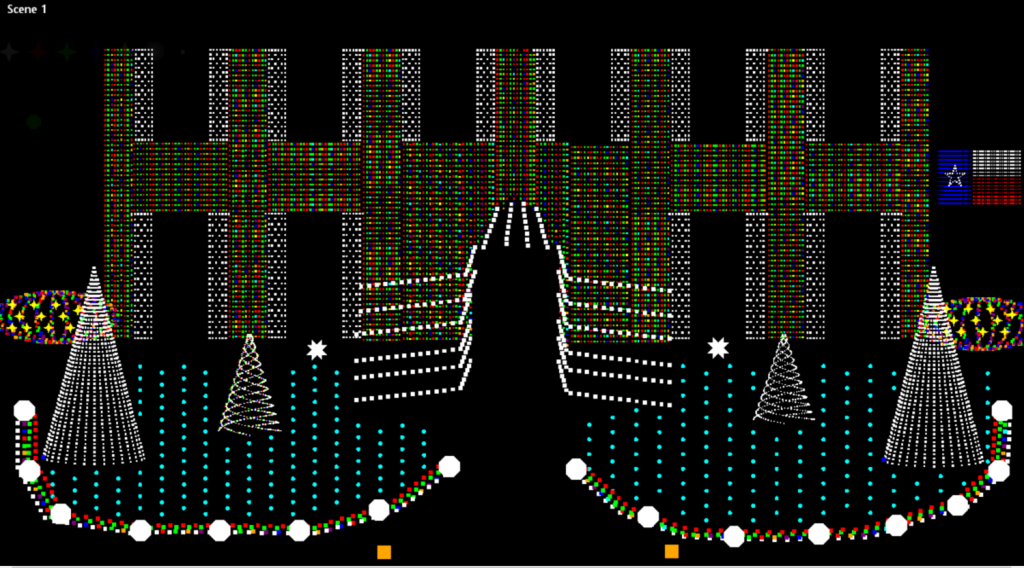
ShowForged then creates the sequence around the user’s actual Light-O-Rama Preview rather than a generic collection of props. Before buying the finished sequence, users also get to see exactly what ShowForged has created. The service provides a full-length preview of the sequence running on the user’s own display layout, allowing them to watch the entire song on their house before deciding to purchase it. That takes some of the guesswork out of buying a sequence, since users aren’t simply hoping the finished product will work with their particular collection of props. Once complete and purchased, the sequence can be placed into the appropriate Light-O-Rama folder and incorporated into the show.
Users can also give ShowForged additional information to improve the result. Lyrics can be “cast” so the system knows which characters or props should sing particular parts of a song, while props intended to operate together can be placed into groups within the Preview. Even naming conventions can make a difference.
“You can name things for more context,” Kevin explained. “For example, instead of Eyes, Outline, Mouth, use Face Left – Eyes, Face Left – Outline, Face Left – Mouth. This helps us categorize things better.”
The technology is also being developed to understand more from the visual layout itself, reducing its dependence on perfect naming and making it easier to work with the enormous variety of displays people have already built.
More Than Just an AI Sequencer
With artificial intelligence appearing in seemingly everything these days, it would be easy to describe ShowForged simply as an “AI Christmas light sequencer,” but that doesn’t really explain what Kevin is building.
“I didn’t want everything to be just rule-based,” he said, “so I leverage AI to research the song and have tools to break down the song, so that it can help make a great show.”
In other words, AI is part of the process rather than the entire process. ShowForged uses a collection of tools to analyze the music, understand its structure, and determine how elements of a particular display can work with it.
One of the most difficult pieces has been vocals. Anyone who has programmed singing faces knows that identifying the lyrics is only part of the problem. The system also needs accurate timing and the correct mouth shapes to make a singing prop look convincing.
“Vocals are a pretty tough problem, and we do multiple passes to get the words, timing, and mouth shapes right,” Kevin said. “We still have issues with chorus words when the lead singers are also singing, but we keep making small improvements to get closer to where I am happy.”
That willingness to talk about what isn’t perfect yet is important because ShowForged is still actively being developed. Kevin believes the vocals are already strong, but some songs can still require tweaking. At the same time, vocals are the part of the system he is most proud of precisely because he wasn’t certain they could be automated successfully when he began.
“When I first started, I figured I could get everything else working eventually, but I wasn’t sure vocals would be possible,” he said. “So I think that is what I am most proud of.”
What Happens When Real Displays Get Involved
One of Kevin’s biggest surprises during development has been discovering just how differently people construct their displays. There are custom props, motion effects, displays built almost entirely from pixels, others combining pixels with large collections of traditional AC lights, and users running several different generations of Light-O-Rama software.
“A lot has surprised me,” Kevin said. “First, the huge variety in how people set up their props, the great props everyone has, and the demand for older Light-O-Rama software.”
Every new display has the potential to reveal another situation he hadn’t anticipated. Motion props were one example. Another was encountering users with displays consisting almost entirely of traditional AC props with only a handful of pixels.
“When I think I have everything almost done, another thing I hadn’t thought of pops up,” he said.
That variety has made customer testing an important part of ShowForged’s development, and the feedback isn’t simply being used to squash bugs. In some cases, it has changed what Kevin is building.
One tester wanted a show that primarily used blue and white, which led Kevin to begin developing a color palette control. Other testers have submitted songs he never would have chosen himself and uncovered issues that otherwise might have remained hidden. Requests for compatibility with older Light-O-Rama configurations have also influenced development.
“The support of customers and their feedback has a huge impact on the product and on what I work on for them,” Kevin said.
Beginners and Veterans Have Different Problems
One interesting aspect of ShowForged is that Kevin isn’t building it exclusively for people who are new to animated lighting. He sees potential uses at both ends of the experience spectrum.
“I think people who are just getting into animated displays are overwhelmed, have a hard time adapting sequences to their displays, and just want something that looks great,” he said. “Experienced sequencers have the knowledge, but it takes a lot of time to get where they want.”
For a beginner, the goal is to make it possible to create something that looks good without first becoming an expert in every aspect of sequencing software. Experienced users face a different problem. They already know how to sequence, but they also know exactly how much time it takes.
Kevin sees ShowForged as a way of creating a strong starting point by generating the vocals, effects, and overall design and then allowing an experienced sequencer to modify those results rather than beginning with an empty grid.
“I hope that by getting sequences with vocals and other designs, they can tweak them to their liking much more quickly,” he said. “I hope to give experienced sequencers more knobs to help control the output, so they can get a show closer to what they are envisioning.”
That distinction is important because ShowForged isn’t necessarily trying to remove the person from the creative process. For some users, the generated sequence may be exactly what they need. Others may treat it as a foundation and then add their own touches. Either way, the goal is to reduce the amount of repetitive work required before the creative part can begin.
When the Display Changes
Christmas displays rarely stay the same for very long. A tree gets replaced, dumb RGB becomes pixels, a matrix gets added, singing faces appear, or props simply move around the yard. Traditionally, those changes can mean revisiting old sequences and adapting them to the new version of the display.
ShowForged is being designed around a different idea: regenerate the sequence for the new Preview.
“I don’t want people to worry about adding new props and having to redo all their sequences, or upgrading from RGB to pixels, or adding a matrix and having to buy all new sequences,” Kevin said.
Sequences purchased through the service can currently be regenerated at no additional charge through January 31 of the following year. After that period, a $5 fee reopens free regenerations for that sequence for the remainder of the year. Someone moving from RGB to pixels can also pay the difference between the two sequence tiers rather than purchasing the sequence again from scratch.
“There is already a lot of time spent setting up the hardware, running the lights, and testing,” Kevin said. “I hope all the effort goes into setting up the hardware, and the sequences become the easy part!”
For anyone who has ever changed a major part of a display and then realized just how many old sequences would need to be updated, that’s an appealing goal.
Where ShowForged Goes Next
Kevin’s list of things he still wants to add isn’t exactly short. Motion devices such as lasers are on the list, as are improved compatibility with older Light-O-Rama versions, more controls over how sequences are generated, and eventually support for xLights. He is also working on the ability for users to incorporate their own images and videos into matrix sequences.
“Oh wow, there are tons of things I want to get working,” Kevin said.

One of the larger ideas is a marketplace for sequence creators. Under that concept, creators could sell their work through ShowForged while the platform handles modifying and compiling those sequences for each customer’s individual Preview.
That could potentially address one of the persistent challenges with commercial sequences. A creator could design a sequence while ShowForged handles much of the work required to translate that design onto displays that don’t look exactly like the one on which it was originally created.
“I hope it becomes the go-to site for people needing sequences,” Kevin said. “I want it to be capable of generating sequences that make spectacular shows, with a booming marketplace for sequence creators whose sequences automatically get tuned to each customer’s preview.”
His ambitions don’t necessarily stop with Christmas lights, either. Once he is satisfied with the sequencing side of the platform, Kevin sees possibilities for applying some of the same technology elsewhere.
“After I get sequences working just the way I want, who knows where we will go next: firework shows, drones. The options are limitless.”
Built by Someone Who Builds Light Shows
There is another part of the ShowForged story that may be especially interesting to people in the animated lighting community. This isn’t a large software company that suddenly discovered Christmas lights as a potential market.
“ShowForged is a one-person company,” Kevin said. “I build it nights and weekends, alongside my day job.”
The approach is patent pending, and Kevin says every type of sequence the system compiles has been tested using real Light-O-Rama hardware at his own house. ShowForged only began selling sequences in September, so this is still a very young product. Features are being added, unusual display configurations are being discovered, and Kevin readily acknowledges areas where the system can still be improved.
In many ways, however, that is what makes the project interesting to watch. Animated Christmas lighting has always been a hobby where technology and creativity collide. We went from mechanical controllers to computer-controlled AC lights, then to RGB, individually controlled pixels, matrices, singing props, and increasingly elaborate effects. Each step expanded what was possible, but usually added another layer of complexity along with it.
Kevin wants ShowForged to push in the opposite direction by making the technology behind the scenes more sophisticated so the person building the Christmas display has less to worry about.
“I hope it takes the software out of the equation,” he said. “I am hoping that having sequences created on your own preview will make it easier to have new songs each year, have more variety, and have all the latest songs you want in your show.”
For Kevin, the technology may have started as a way to solve some problems with his own Christmas display, but the people using it have quickly become a much bigger part of the project.
“We started selling this September,” he said, “and the best part so far has been the people using it.”
And for a hobby that has always been built as much around the people sharing ideas as it has been around the lights themselves, that seems like a pretty good place for ShowForged to start.