The History of Trans-Siberian Orchestra
Every Christmas season, it happens.
The lights go up. Trees appear in living rooms. Holiday music returns to the radio. Families begin pulling treasured decorations from storage boxes that have been packed away for another year. Then, somewhere in the background, a familiar sound begins to play. It starts softly before building into a powerful combination of rock guitars, orchestral instruments, and holiday magic. For millions of people, that sound means Christmas has officially arrived. That sound belongs to Trans-Siberian Orchestra.
Over the past three decades, Trans-Siberian Orchestra, often called TSO, has become one of the most recognizable names in holiday music. Their albums have sold millions of copies. Their concerts have entertained generations of fans. Their songs have become staples of radio stations, Christmas displays, and family traditions across North America. Yet few people realize that TSO began as an ambitious dream from a producer who believed rock music could become something much larger than anyone imagined. That producer was Paul O’Neill.
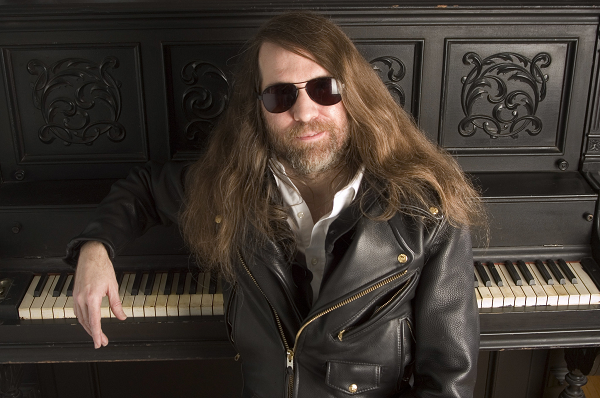
Long before Trans-Siberian Orchestra became a household name, O’Neill had already established himself in the music industry. Throughout his career, he worked with numerous artists and bands, but he was never satisfied with simply producing another collection of songs. He believed music could tell stories on the same scale as Broadway productions, classical symphonies, and major motion pictures.
His vision was simple but ambitious. He wanted to combine the energy of rock music with the emotion of classical compositions and the storytelling power of theater. Many people thought the concept was impossible. Rock bands played concerts. Orchestras performed symphonies. Theater productions told stories. Combining all three into a single experience seemed like a risky experiment. Fortunately, O’Neill was willing to take the risk.
The roots of Trans-Siberian Orchestra can be traced back to O’Neill’s work with the heavy metal band Savatage. Throughout the late 1980s and early 1990s, he collaborated closely with the group, helping create increasingly ambitious concept albums that pushed beyond traditional rock music. Those projects allowed O’Neill to experiment with storytelling, orchestral arrangements, and larger musical themes. While audiences may not have realized it at the time, many of the ideas that would eventually define Trans-Siberian Orchestra were already taking shape.
By the mid-1990s, O’Neill was ready to launch something entirely new. In 1996, Trans-Siberian Orchestra released its debut album, Christmas Eve and Other Stories. Rather than creating a collection of unrelated holiday songs, O’Neill built an entire narrative around an angel sent to Earth on Christmas Eve to witness the impact of kindness, compassion, and human connection.
The album blended narration, choirs, orchestral arrangements, and rock instrumentation into a format that felt both familiar and revolutionary. Listeners could enjoy the music while also following a complete story. The concept was unlike anything most people had encountered before.
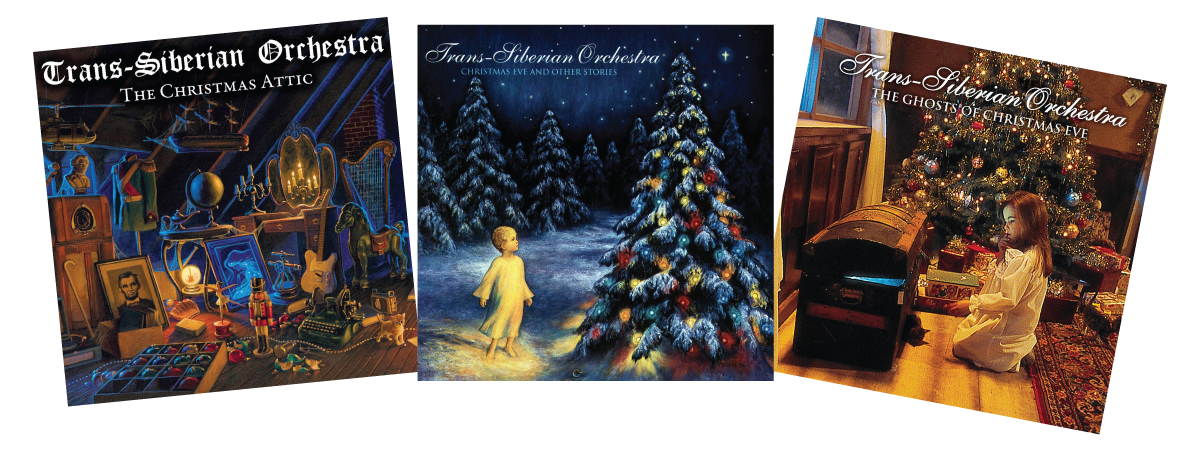
While the album found an audience, nobody could have predicted how successful the project would eventually become. Additional releases followed, including The Christmas Attic in 1998 and The Lost Christmas Eve in 2004. Together, these albums became known as the Christmas Trilogy and helped establish Trans-Siberian Orchestra as one of the most successful holiday music projects in history.
As the albums gained popularity, so did the concerts. Attending a TSO performance quickly became an experience unlike any traditional rock show. Audiences were treated to towering lighting rigs, pyrotechnics, lasers, narration, orchestral musicians, vocalists, and stunning visual effects. The performances felt part rock concert, part Broadway production, and part Christmas spectacular. For many fans, attending a Trans-Siberian Orchestra concert became a holiday tradition all its own. But while the music and concerts were impressive, one song would ultimately help change Christmas decorating forever. That song was Wizards in Winter.
Released on The Lost Christmas Eve in 2004, the instrumental track quickly became a favorite among TSO fans. The song featured dramatic tempo changes, soaring melodies, and an energy that seemed tailor-made for visual storytelling. What happened next would have a lasting impact on Christmas celebrations across America.
In Mason, Ohio, an electrical engineer named Carson Williams spent months creating a computerized Christmas light display unlike anything most people had ever seen. Using approximately 16,000 lights, Williams synchronized every bulb, strand, and decoration to Wizards in Winter. Visitors could tune their car radios to hear the music while watching the lights perform the song. The display was remarkable and then the internet discovered it.
In 2005, a video of Williams’ display began spreading online. This was years before social media became part of everyday life and before YouTube dominated online video. People shared the clip through websites, email chains, and holiday decorating forums.
For millions of viewers, it was the first time they had ever seen Christmas lights synchronized perfectly to music. The effect was mesmerizing. Lights blinked, chased, faded, and exploded across the property in perfect time with every note. Suddenly, Christmas decorating looked very different. The video became a viral sensation and attracted national attention. More importantly, it inspired homeowners around the world.
Across the country, hobbyists began experimenting with controllers, sequencing software, FM transmitters, and computerized lighting systems. Online communities formed. New technologies emerged. What had once been a niche hobby began growing into a nationwide movement.
Today, synchronized Christmas displays can be found throughout North America. Some feature a few thousand lights. Others use hundreds of thousands. Entire neighborhoods, parks, and commercial attractions now create elaborate musical experiences for visitors. Many decorators trace that movement back to Carson Williams and Wizards in Winter.
In many ways, the song accomplished something remarkable. It moved beyond the world of music and became part of a new holiday tradition. For Christmas display enthusiasts, Wizards in Winter is more than just another TSO song. It represents a turning point. Even people who have never heard of Carson Williams have likely benefited from his influence. Every synchronized display they enjoy today exists, at least in part, because one homeowner decided to try something new with a Trans-Siberian Orchestra song.
As the years passed, Trans-Siberian Orchestra continued to grow. The organization expanded its touring operations, often performing in multiple regions simultaneously. Their albums continued selling as their audiences continued growing.
Perhaps even more importantly, the group became known for its charitable efforts. Throughout its history, Trans-Siberian Orchestra has donated millions of dollars to charities, schools, hospitals, and community organizations. That commitment to giving back reflects many of the same themes found throughout their music: hope, compassion, generosity, and the power of human connection.
The loss of Paul O’Neill in 2017 raised questions about the future of the organization he built. Yet the music, stories, and performances continue today, carried forward by the musicians and creative teams who share his vision. aMore than thirty years after O’Neill first imagined blending rock music, classical influences, and storytelling into a single experience, Trans-Siberian Orchestra remains one of the most successful touring acts in North America and one of the most beloved names in holiday entertainment.
Every Christmas season, their music returns. Families gather around decorated trees. Holiday displays illuminate neighborhoods. Concert arenas fill with excited fans. And somewhere, perhaps in a front yard decorated with thousands of synchronized lights, Wizards in Winter begins to play once again.
For millions of people, that sound is Christmas.