



“The Saturday Evening Post” and Christmas
The publication known as The Saturday Evening Post extends its identity beyond that of a traditional magazine. It functions as a gauge of cultural trends and actively influences American values. Throughout American history, Christmas has been visually and emotionally shaped by only a limited number of institutions beyond religious and commercial influences.
The magazine was established in 1821 but achieved substantial cultural influence in the early 20th century when George Horace Lorimer became its editor in 1899. Lorimer demonstrated excellent talent recognition and storytelling skills when he selected writers and artists whose creations aligned with mainstream American tastes.
Rockwell, Leyendecker, & the Post
The magazine’s covers featured Norman Rockwell’s work which made the most significant contribution to the Christmas mythos. Norman Rockwell created 322 magazine covers for The Saturday Evening Post during his period from 1916 to 1963 with a significant portion featuring holiday themes.
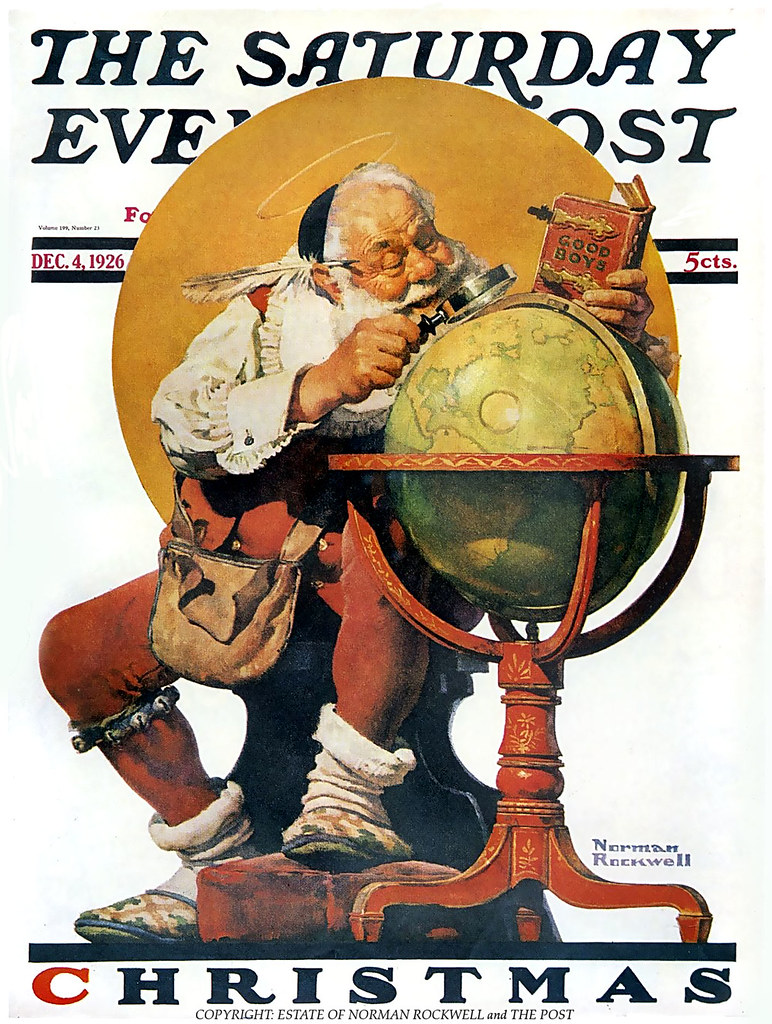
Notable Christmas Covers by Norman Rockwell:
- “Santa at the Map” (Dec. 23, 1939): Santa mapped out his Christmas Eve journey with both whimsy and logistical precision adding depth to his legendary tale.
- “Christmas Trio” (Dec. 6, 1924): This straightforward yet poignant artwork shows three carolers performing in snowy surroundings.
The magazine’s artwork attracted readers, while its content maintained their interest. “The Saturday Evening Post” consistently featured Christmas short stories. They showcased moral teachings and themes of personal redemption or family reunification, which are central to holiday narratives.
But Rockwell wasn’t alone. As Rockwell’s predecessor and source of inspiration, J.C. Leyendecker created illustrations for some of the first Christmas magazine covers. J.C. Leyendecker’s elegant holiday scene portrayals showed cherubic children alongside fashionable Santas and festive couples. His work paved the way for Rockwell’s narrative-focused art.
Stories of the Season: Fiction and Sentiment
The magazine’s artwork attracted readers while its content maintained their interest. “The Saturday Evening Post” consistently featured Christmas short stories as they primarily showcased moral teachings and themes of personal redemption or family reunification which are central to holiday narratives.
Notable Christmas Stories Published in the Post:
- “The Gift of the Magi” by O. Henry (reprinted often): Originally appearing elsewhere, this narrative became a regular holiday feature in the magazine due to its representation of selfless love.
- Booth Tarkington’s holiday tales: Tarkington’s Christmas stories centered around Midwestern families and frequently depicted the challenges and victories that intergenerational households experience during the holiday season.
- “The Miracle of 34th Street” (1947 film tie-in): Though “The Miracle of 34th Street” story was not printed in the Post publication its cinematic success introduced comparable motifs such as Santa as a savior and belief in the impossible into its written works.
Many of these stories shared a few key elements. These stories incorporated an underdog protagonist who faced a moral challenge. The protagonist experienced an emotional release and ultimately reinforced family bonds or love. Their optimistic yet grounded approach matched perfectly with the Christmas spirit of hope and renewal.
Saturday Evening Post During Wartime Christmas: Patriotism, Sacrifice, and Hope
The Saturday Evening Post changed its Christmas coverage during World War II to mirror the serious atmosphere of wartime. Covers from this period show several sentiments. Empty seats at dinner tables around the nation show where loved ones are serving far from home. Letters from soldiers being read by candlelight. Children looked at images of their fathers in military uniform while longing for their return.
A Rockwell artwork that is not a Christmas edition captures the essence of wartime family reunions similar to “Homecoming” (May 26, 1945) in a December publication. The painting depicts a soldier coming home to a scene of joyful chaos. The message was clear: The American dream of having a safe and warm family Christmas was a cause worth fighting for even during times of sacrifice.
Consumerism and the Modern Christmas
Following WWII America saw increased prosperity which was shown in The Saturday Evening Post through expanded coverage of Christmas commercialization. The magazine featured gift guides along with advertisements for a variety of items ranging from toasters to automobiles. Narratives about shopping manias frequently satirize the excessive behavior of shoppers. The advent of family car travel enabled seasonal vacations which opened up new holiday travel opportunities. Despite receiving criticism for moving away from Christmas’s spiritual origins the *Post* succeeded in mixing commercial elements with emotionally powerful narratives and artwork.
The Saturday Evening Post Reintroduced Historical Christmas Traditions
The Saturday Evening Post suffered a decline in cultural influence during its 1970s relaunch. The magazine’s historical influence on American traditions and holidays such as Christmas became fundamental to its renewed identity. The magazine now functions primarily as a nostalgic outlet that frequently resurfaces vintage material during holiday seasons.
Its “Classic Christmas” editions showcase:
- Reprints of Rockwell and Leyendecker covers.
- Fiction from the early 20th century.
- Old-fashioned holiday customs along with time-honored recipes from the past.
The Post now functions as an archivist for American Christmas traditions and draws in readers who want to rediscover the simplicity and depth of past celebrations.
The Saturday Evening Post and the Spirit of Christmas, Illustrated and Immortalized
The Post documented America’s changing Christmas imagery through depictions of Santa Claus and service members as well as sleigh bells and shopping bags. The publication simultaneously mirrored America’s understanding of Christmas and shaped its perception of the holiday’s sacred aspects as well as its emotional depth and public display.
The Saturday Evening Post transformed Christmas beyond a mere calendar entry through Norman Rockwell’s artwork and short story writers’ narratives. Christmas evolved into a national mood and tradition which became embedded as collective memory through thousands of printed pages that continue to resonate today.